For the Love of Dresdens
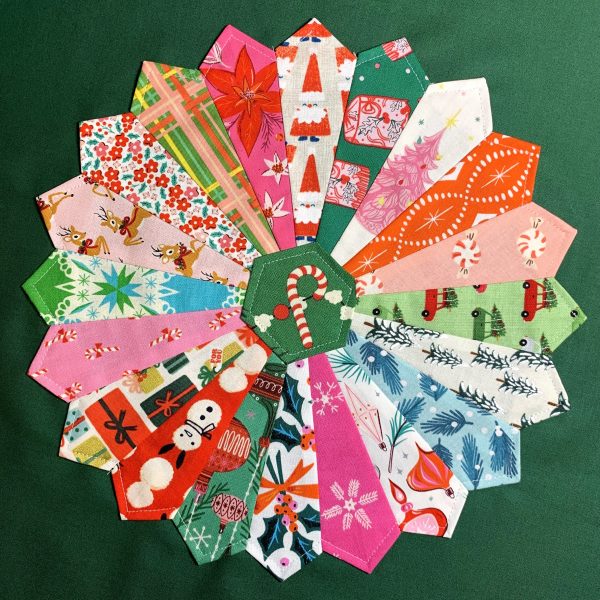
I’ve been making Dresden plates for years, and it’s one of my very favorite traditional patterns. Some quilters seem hesitant to try them for the first time while others are confused about how they’re even sewn together. I receive lots of messages asking if it requires knowledge of foundation paper piecing. So let’s talk a bit about Dresden plates, shall we?
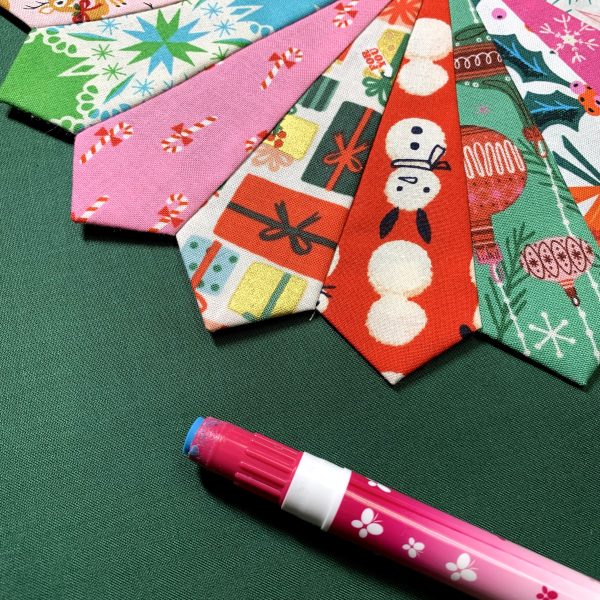
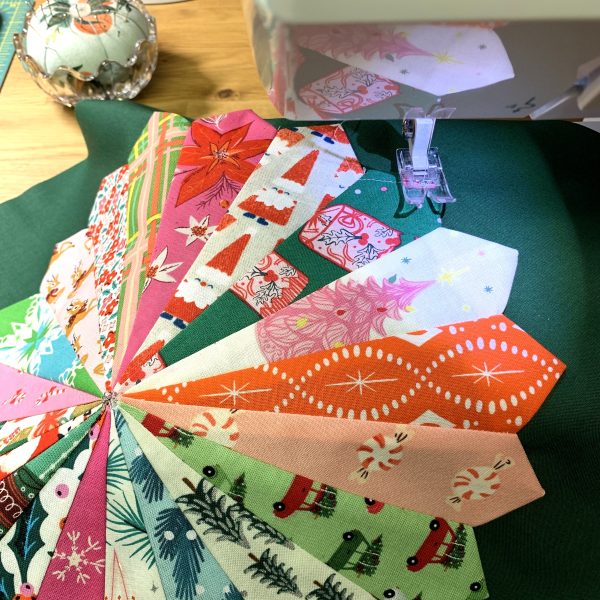
Dresden plates are made using traditional sewing techniques. There’s no foundation paper piecing required. A template is used to cut a number of Dresden “blades,” the pointed shapes that create a full circle when sewn together. Though they may look intimidating, creating these blades is actually quite easy and doesn’t even require sewing curves. (I’m terrible at sewing curves, by the way.)
Once the Dresden plate is made, it can either be machine or hand appliquéd onto a background fabric. A center shape ––typically a circle–– is then appliquéd in place at the center of the Dresden plate. In my Dresden Plate Quilt Block pattern, I chose to swap out the circular center shape in favor of a hexagon, simply because I find circles more difficult to make. Mine rarely look uniform, whereas a hexagon is a simple shape to create with clean, crisp lines.
My Dresden Plate Quilt Block is a skill building pattern. If you’ve never made a Dresden plate before, tried machine appliqué or learned to baste an English paper piecing (EPP) paper shape, this pattern will teach you all three techniques. By the time you finish your first quilt block, you’ll have three new skills in your sewing tool belt. So what are you waiting for?
Stay up to date!
Subscribe to receive occasional emails about new pattern releases, shop sales and exciting news updates.